FRENCH LANGUAGE TRAINING IN CHANDIGARH
French Online Classes in Chandigarh
Learn French from the comfort of your home with our expert-led online classes. Improve your speaking, listening, reading, and grammar skills through interactive lessons.
How Long Does It Take To Learn French
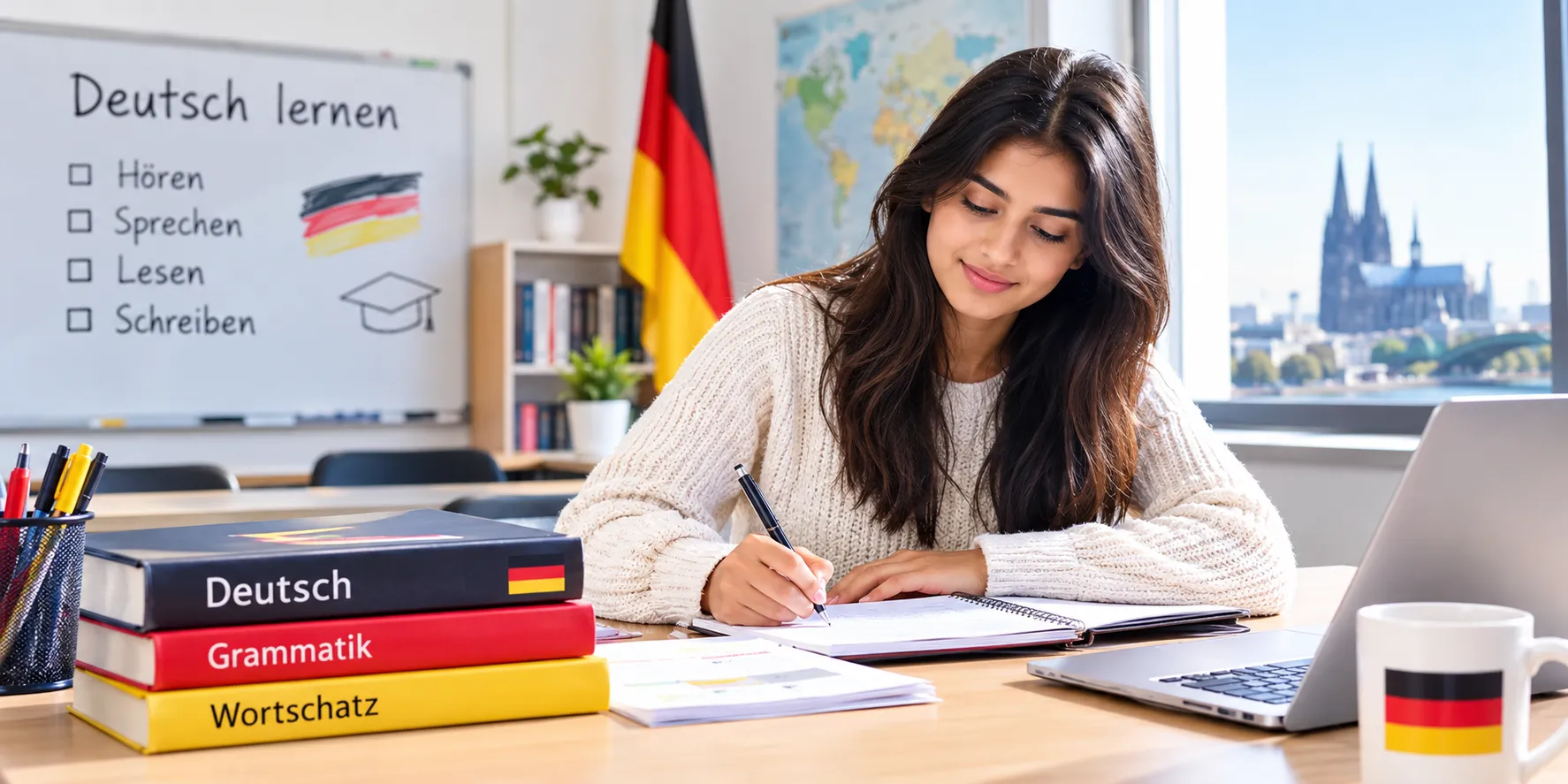
Learning French is a journey that differs depending on your beginning level, study strategy, and commitment. As a Category I language, French is among the simpler languages for English speakers to pick up. The Foreign Service Institute (FSI) predicts that achieving a B2 level on the CEFR scale will require around 600-750 hours of study (or 24-30 weeks of intensive practice). While these hours can be spent in a variety of ways, the correct setting—such as immersive sessions or guided practice with experienced mentors—can greatly improve your development and confidence. Every step brings you closer to being fluent!
Pricing & Packages
Online classes fee:
FEE STRUCTURE for Online Classes
| COURSE | DURATION | FEE in INR (Domestic students) | FEE (International Students) in USD (Rate 85) |
|---|---|---|---|
| FRENCH | DELF A1 (1.5 Months) | Rs. 11,999/- | $ 153 |
| DELF A2 (2 Months) | Rs. 12,999/- | $ 177 | |
| DELF B1 (2 Months) | Rs. 15,999/- | $ 212 | |
| DELF B2.1 (1 Month) | Rs. 17,999/- | $ 236 | |
| DELF B2.2 (1 Month) | |||
| FRENCH TCF Exam for PR in CANADA/QUEBEC | 1.5 Months | Rs. 16,000/- | $ 212 |
French Classes Online Timing
| Morning batch |
BASIC 7:00 AM - 8:30 AM A1 8:30 AM - 10:00 AM A2 8:30 AM - 10:00 AM |
| Evening batch |
BASIC 4:30 PM - 6:00 PM A1 6:00 PM - 7:30 PM A2 6:00 PM - 7:30 PM |
French Greetings
| Le vocabulaire | |
|---|---|
| Français | Anglais |
| À bientôt | See you soon |
| à demain | see you tomorrow |
| au revoir | goodbye |
| Bonjour | Hello/ good morning/ good afternoon |
| Bonne nuit | Good night |
| Bonne soirée | Good evening |
| bonne chance | Good luck |
| comment vas-tu? | How are you? |
| quel est ton nom ? | What is your name? |
| Désolé | Sorry |
| De rien | You’re welcome |
| Enchanté | Nice to meet you |
| Et toi? / Et vous? | And you? /and yours? |
| Excusez-moi | Excuse me |
| I’aprés-midi | afternoon |
| Le matin | Morning |
How to tell the time in French
There are two ways to say the time in French, one is formal and one is informal.
| Formal | Informal | |
| 18 h 00 | dix-huit heures | six heures |
| 18 h 05 | dix-huit heures cinq | six heures cinq |
| 18 h 15 | dix-huit heures quinze | six heures et quart |
| 18 h 20 | dix-huit heures vingt | six heures vingt |
| 18 h 30 | dix-huit heures trente | six heures et demie |
| 18 h 35 | dix-huit heures trente-cinq | sept heures moins vingt-cinq |
| 18 h 40 | dix-huit heures quarante | sept heures moins vingt |
| 18 h 45 | dix-huit heures quarante-cinq | sept heures moins le quart |
| 18 h 50 | dix-huit heures cinquante | sept heures moins dix |
Cardinal Numbers in French
How to count in French
The French cardinal numbers (les nombres cardinaux) are the basic numbers. We use them to count, make calculations and say how many of something there is.
Examples: Tu as deux voitures. (You have two cars.)
Take a look at the table below to learn how to spell the French cardinal numbers.
| 1 | un | 11 | onze | 21 | vingt et un | 31 | trente et un |
| 2 | deux | 12 | douze | 22 | vingt-deux | 40 | quarante |
| 3 | trois | 13 | treize | 23 | vingt-trois | 50 | cinquante |
| 4 | quatre | 14 | quatorze | 24 | vingt-quatre | 60 | soixante |
| 5 | cinq | 15 | quinze | 25 | vingt-cinq | 70 | soixante-dix |
| 6 | six | 16 | seize | 26 | vingt-six | 80 | quatre-vingts |
| 7 | sept | 17 | dix-sept | 27 | vingt-sept | 90 | quatre-vingt-dix |
| 8 | huit | 18 | dix-huit | 28 | vingt-huit | 100 | cent |
| 9 | neuf | 19 | dix-neuf | 29 | vingt-neuf | 1 000 | mille |
| 10 | dix | 20 | vingt | 30 | trente | 1 000 000 | un million |
| Months & Days in French | |
|---|---|
| Les mois | Translation |
| janvier | January |
| février | February |
| mars | March |
| avril | April |
| mai | May |
| juin | June |
| juillet | July |
| août | August |
| septembre | September |
| octobre | October |
| novembre | November |
| décembre | December |
| Days of the Week French | |
|---|---|
| Les jours de la semaine | Translation |
| lundi | Monday |
| mardi | Tuesday |
| mercredi | Wednesday |
| jeudi | Thursday |
| vendredi | Friday |
| samedi | Saturday |
| dimanche | Sunday |
| le week-end | the weekend |
| le jour de la semaine | a weekday |
| la journée de travail | a workday |
| le jour férié | a bank holiday/a public holiday |
| décembre | December |
Les Couleurs (colours)
| Masculin/ Singulier | Féminin/ Singulier | Anglais |
|---|---|---|
| Blanc | Blanche | White |
| Bleu | Bleue | Blue |
| Brun | Brune | Brown |
| Gris | Grise | Gray |
| Indigo | Indigo | Indigo |
| Jaune | Jaune | Yellow |
| Noir | Noire | Black |
| Rose | Rose | Pink |
| Rouge | Rouge | Red |
| Vert | Verte | Green |
| Violet | Violette | Purple |
| Marron | Marron | Brown |
| Orange | Orange | Orange |
Grammar
What is a noun?
Les noms or les substantifs (nouns) are naming words.
They refer to people (la fille), places (la France), animals (le chat), objects (la table) and concepts (l’amour). A noun can be a subject or an object in a sentence. They are often followed by an article and can be described by adjectives. And sometimes, to avoid repetition, nouns can be replaced by pronouns.
There are several categories of nouns in French: they can be proper or common, countable or uncountable as well as abstract or concrete.
Like in English, nouns can be singular or plural in French, however, unlike English French nouns have gender like, masculine or feminine.
Gender of French nouns
In French, nouns can be masculine (masculins) or feminine (feminins). We can sometimes recognise a noun’s gender by its ending, but the only way to be sure is to always learn nouns together with their article (le/un or la/une).
Some of the examples are- l’homme (the man), le chien (the dog), le tableau (the board), le travail (the work), le chêne(the oak tree) (masculine)
la femme (the woman), la danseuse (the dancer), la librairie (the book shop), la cuisine (the kitchen), la France (the France) (feminine)
| Les pronoms sujects | |
|---|---|
| Singulier | Pluriel |
| je – I | Nous – We |
| Tu – You (informal) | Vous – You (informal plural, formal singular & plural) |
| Il – He | Ils – They (masculine plural) |
| Elle – She | Elles – They (feminine plural) |
What is a verb?
Les verbes (verbs) are doing words or action word. They express an action performed by the subject of the sentence (a noun or a pronoun). In addition to the physical actions, verbs can also describe processes, concepts, states and thoughts.
Some typical French action verbs includes:- courir(to run), danser (to dance), sauter (to jump), chanter (to sing), écrire (to write), lire (to read), etc. Some typical stative verbs in French are être (to be), devenir ( to become), paraître (to appear), rester (to stay) etc.
Les verbes
| Être – to be | Avoir – to have | ||
|---|---|---|---|
| Je suis- I am | Nous sommes- We are | J’ai- I have | Nous avons- We have |
| Tu es- You are | Vous êtes- You are | Tu as- You have | Vous avez- You have |
| Il est- He is | Ils sont- They are (mas.) | Il a- He has | Ils ont- They have (mas.) |
| Elle est- She is | Ells sont- They are (fem.) | Elle a- She has | Ells ont- They have (fem.) |
Aller- to go
| Je vais- I go | Nous allons- We go |
| Tu vas- You go | Vous allez- You go |
| Il va- He goes | Ils vont- They go (mas.) |
| Elle va- she goes | Ells vont- They go (fem.) |
L’infinitif
L’infinitif (the infinitive) is the basic form of the verb. Like the participles, it is a non-conjugated form of the verb, which means that it does not express a tense, person or number.
French infinitives have four possible endings: -er (parler) (to speak), -ir (finir) (to finish), -re (prendre) (to take) or -oir (voir) (to see). In French there are numerous verbs and phrases that are always followed by the infinitive.
Examples:
Marc amie chanter les chansons anglaises. (Marc likes to sing English songs.)
La mére va au magasin pour acheter une robe. (The mother is going to market to buy a dress.)
What is an article?
In French, nouns are almost always preceded by an article or a determiner. This indicates the gender of the noun (masculine or feminine) and its number (singular or plural).
There are two types of articles: definite articles (articles définis) (le, la, les) and indefinite articles (article indéfinis) (un, une, des).
When to use the indefinite article in French
In French, the indefinite articles (articles indéfinis) are un (masculine singular), une (feminine singular) and des (plural for both genders). We use this in the following cases:
- to talk about something non-specific:-
Example: Sara est une amie de Samir. (Sara is a friend of Samir.) (one of many) - in an introductory capacity to mention something for the first time in a text:-
Example: Sara a un vélo (Sara has a bicycle)
When to use the definite article in French
The French definite articles (articles définis) are le in the masculine singular, la in the feminine singular, l’ for singular nouns that start with a vowel, and les in the plural (both genders). They correspond to the English article THE.
We use this in the following cases:
- to talk about a specific person or thing:-
Example: Sara est l’ami de Samir. (Sara is the friend of Samir.) - to refer to a person or thing that has already been mentioned or is already known to the listener/reader:-
Example: Le vélo est gris. (The bicycle is grey.) - And after the verbs like, aimer (to like), adorer (to love), préférer (to prefer), détester (to hate)
What is a preposition?
Prepositions (les prépositions) are small linking words that link elements of a sentence together. They indicate the relationships between words.
In French, there are simple prepositions (à, chez, etc.) as well as longer prepositional phrases (d’après, près de etc.).
Example:
Viens-tu chez moi? (Are you coming to my place ?)
Mon oncle travaille prés de Lyon. (My uncle works near Lyon.)
Learn French speaking
Speaking French is the most difficult ability to acquire, but it’s also the key to genuinely loving the language. Reading, writing, and listening may all be acquired on their own, but speaking fluently calls for confidence, practice, and professional coaching. With small group sessions and one-on-one practice with seasoned pros, our goal at French German Gurus Overseas Institute is to help you become an exceptional speaker. Get fluent more quickly by immersing yourself in authentic dialogues. Join us today to begin your journey—Bon courage!
Vocabulary
French Vocabulary by Topic
| Vêtements et accessoires (Clothing and accessories) | |
|---|---|
| Pendentif | Pendant |
| Ceinture | Belt |
| Chemise | Shirt |
| Robe | Dress |
| Jupe | Skirt |
| Jeans | Jeans |
| Boucle | Earring |
| Articles de toilette (Toiletries) | |
|---|---|
| Peigne | Comb |
| Savon | Soap |
| Shampooing | Shampoo |
| Se maquiller | Make up |
| Miroir | Mirror |
| Brosse à dents | Toothbrush |
| Dentifrice | Toothpaste |
| Le corps humain (The human body) | |
|---|---|
| Œil | Eye |
| Affronter | Face |
| Main | Hand |
| Cœur | Heart |
| Bouche | Mouth |
| Oreille | Ear |
| Membres de la famille (Family Members) | |
|---|---|
| Garçon | Boy |
| Fille | Girl |
| Père | Father |
| Mère | Mother |
| Enfant | Child |
| Sœur | Sister |
| Quelques magasins spécialisés (A few specialized shops) | |
|---|---|
| Pharmacie | Chemist shop |
| Fleuriste | Florist |
| Librairie | Book store |
| Restaurant | Restaurant |
| Pâtisserie | Pastry shop |
| Habitations et chambres (Habitations and rooms) | |
|---|---|
| Salle de bain | Bathroom |
| Chambre double | Doubl-room |
| Bâtiment | Building |
| Auberge | Hostel |
| Cuisine | Kitchen |
| Meubles et gadgets à la maison (Furniture and gadgets at home) | |
|---|---|
| Baignoire | Bath-tub |
| Lit | Bed |
| Télévision | Television |
| Téléphone mobile | Mobile phone |
| Réfrigérateur | Refrigerator |
| La ville (The city) | |
|---|---|
| Feu de circulation | Traffic light |
| Arbre | Tree |
| Bibliothèque | Library |
| Route | Road |
| Université | University |
| Appartement | Apartment |
| Nourriture et boissons (Food and Drinks) | |
|---|---|
| Petit-déjeuner | Breakfast |
| Pain | Bread |
| Lait | Milk |
| Salade | Salad |
| Eau | Water |
| Sucre | Sugar |
| Ustensiles et appareils de cuisine (Utensils and Apparatus in the Kitchen) | |
|---|---|
| Four de cuisson | Baking oven |
| Couverts | Cutlery |
| Bouteille | Bottle |
| Bouilloire | Kettle |
| Plaque | Plate |
| Fruits (Fruits) | |
|---|---|
| Pomme | Apple |
| Banane | Banana |
| Fraise | Strawberry |
| Cerise | Cherry |
| Pastèque | Watermelon |
| Légumes (Vegetables) | |
|---|---|
| Carotte | Carrot |
| Pomme de terre | Potato |
| Épinard | Spinach |
| Tomate | Tomato |
| Oignon | Onion |
| En classe (In the classroom) | |
|---|---|
| Livre | Book |
| Chaise | Chair |
| Tableau noir | Blackboard |
| Tableau | Table |
| Porte | Door |
| Matières d’études à l’école (Subjects of study at school) | |
|---|---|
| Algèbre | Algebra |
| Biologie | Biology |
| Anglais | English |
| Histoire | History |
| Art | Art |
| Musique | Music |
| Sports et jeux (Sports and Games) | |
|---|---|
| Football | Football |
| Natation | Swimming |
| Surf | Surfing |
| Dansant | Dancing |
| Randonnée | Trekking |
| Insectes et animaux (Insects and Animals) | |
|---|---|
| Fourmi | Ant |
| Éléphant | Elephant |
| Voler | Fly |
| Poisson | Fish |
| Chat | Cat |
| Oiseau | Bird |
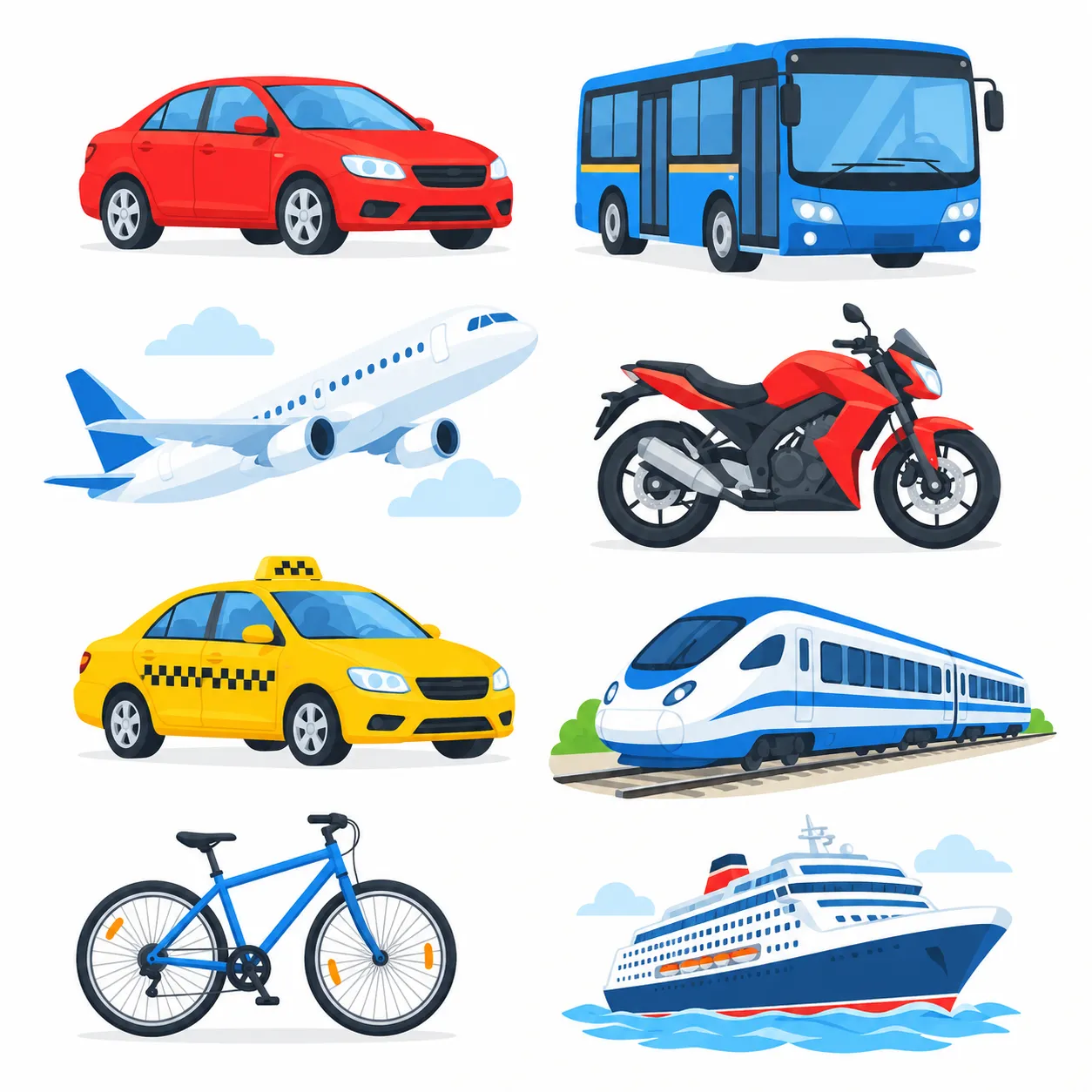
| Moyens de transport (Means of Transport) | |
|---|---|
| Voiture | Car |
| Bus | Bus |
| Avion | Aeroplane |
| Motocyclette | Motor cycle |
| Taxi | Taxi |
| Former | Train |
| Mots de vocabulaire | |
|---|---|
| Saisons | Season |
| Le printemps | Spring |
| Lété | Summer |
| L’automne | Autumn |
| L’hiver | Winter |
| Mots de vocabulaire | |
|---|---|
| Les fêtes | The holidays |
| Le carnaval | The carnival |
| L’anniversaire | The birthday |
| Halloween | Halloween |
| Noël | Christmas |
| Mots de vocabulaire | |
|---|---|
| En ville | In town |
| Au restaurant | At the Restaurant |
| Au parc | At the park |
| Sur le chantier | On the construction site |
| Chez le coiffeur | At the hairdresser |
| Mots de vocabulaire | |
|---|---|
| Le sport | Sports |
| Les jeux olympiques d’hiver | The Winter Olympics |
| Le football | Football |
| Le tennis | Tennis |
| Les échecs | Failures |
| Mots de vocabulaire | |
|---|---|
| En voyage | When traveling |
| L’aéroport | The airport |
| L’hôtel | The hotel |
| La visite guidée | The guided tour |
| La gare | The station |
| Mots de vocabulaire | |
|---|---|
| Les vêtements | The clothes |
| Les vêtements d’hiver | Winter clothes |
| La tenue de fête | The party outfit |
| Jour de lessive | Laundry day |
| L’étagère à chaussures | The shoe rack |
| Mots de vocabulaire | |
|---|---|
| Les aliments | Foods |
| La salade de fruits | Fruit salad |
| Le petit-déjeuner | Breakfast |
| Autour du feu de camp | Around the campfire |
| Les légumes | Vegetables |
| Le vocabulaire | |
|---|---|
| Beaucoup de | Lots of |
| il neige | It’s snowing/ it snows |
| I’herbe | Grass |
| boîte | box |
| La craie | chalk |
| La piscine | Swimming pool |
| Le papillon | Butterfly |
| vert | Green |
| rose | Pink |
| aussi | Also |
| demain | Tomorrow |
What Is the DELF Exam?
France’s national Ministry of Education grants the internationally recognized French Language Proficiency Certificate known as the Diplôme d’études en langue française (DELF or Diploma of French Language Studies). The Common European Framework of Reference (CEFR), a framework used in second language learning worldwide, defines a scale of language proficiency that is the basis for a number of independent evaluations.

Six Levels of Language Proficiency
| CEFR LEVEL | DESCRIPTION | DELF/DALF ASSESSMENT |
|---|---|---|
| Basic Language User | ||
| A1 | Recognizes basic language ability where the user can interact in a simple way. | DELF A1. |
| A2 | Recognizes the linguistic competency of a basic user who can communicate socially. | DELF A2. |
| Independent Language User | ||
| B1 | Recognizes a language user who can manage with some independence in most situations encountered while travelling. | DELF B1. |
| B2 | Recognizes a language user who is able to communicate independently in most situations: construct arguments, defend opinions, explain viewpoints and negotiate. | DELF B2. |
| Proficient User | ||
| C1 | Recognizes an independent language user, fluent, spontaneous; extensive vocabulary, clear, well-structured discourse without hesitation. | DALF C1. |
| C2 | Recognizes an advanced language user; precise, fluent, sophisticated use in advanced-level and academic situations. | DALF C2. |
TEF EXAM to fulfill your CANADA PR dream
TEF EXAM
- TEF is an international reference test awarded by the CCI Paris Ile-de-France. The Test d’évaluation de français (TEF) measures your level of French language knowledge and skills.
- TEF is officially recognized by the Canadian Ministry of Immigration, Refugees and Citizenship.
- Required for permanent residency applications to Canada
- Accredited centres: Af Ahmadabad, Af Bhopal, Af Bombay, Af Chandigarh, Af Madras, Af Hyderabad, Af Lucknow.
TEF QUÉBEC
- Validity: 2 years
- TEF is an international reference test awarded by the CCI Paris Ile-de-France. The Test d’évaluation de français (TEF) measures your level of French language knowledge and skills.
- TEF is officially recognised by the Quebec Ministry of Immigration, Francisation and Integration
- Required for permanent residency applications to Québec
- Accredited centres: Af Bhopal, Af Bombay, Af Madras, Af Lucknow.
Certifications
At French German Gurus Overseas, we prepare our students for internationally recognized certifications like:
- DELF (Diplôme d’Études en Langue Française): A certification awarded by the French Ministry of Education, recognized worldwide.
- DALF (Diplôme Approfondi de Langue Française): For students who have reached a more advanced level (C1, C2).
- TEF Canada (Test d’évaluation de français): For students who required for permanent residency applications to Canada.
- TEF QUÉBEC (Test d’évaluation de français): For students who Required for permanent residency applications to Québec.
We offer preparatory classes for these exams, including A1, A2, B1, B2 levels.